
Blog

Featured Post

The AI Question Creatives Are Not Ready For

This past Friday, I attended a meetup of creatives in Toronto. The gathering centred on a discussion about moving one’s career from Agency to In-House, or vice versa. It was a lively discussion, and, as is common these days, it veered into AI. Another lively back-and-forth ensued until I asked a question many of you will be encountering sooner rather than later. Someone is going to look at your work and ask: "How much of this is AI?"

Read More →


Blog Post 1

The Soul Of The New Machine Is Not Mine

I am coming across more and more postings and articles where the respondents claim AI wrote it. In many cases, this is absolutely true. AI can “write” but, in many respects, it is the voice of a new machine, not the author. If any of you have read my books or articles, attended one of my presentations or taken one of my LinkedIn Learning courses, you don’t need to see my byline. You just know, “Yep, that’s Tom.”

Read More →
Blog Post 2

Ageism, The Last Acceptable Practice.

As a 70-year-old who has spent well over 30 years teaching Digital Media, speaking at conferences around the world, and conducting seminars to audiences and classes composed solely of that “younger generation” I have been subjected to that “last acceptable practice.”There isn’t much you can say or do about it because ageism is one of those things you know when you experience it. But try to prove it.

Read More →
Blog Post 3

Where are the "Crazy Ones?

In 1997, Apple aired what many consider one of the more iconic TV commercials ever. It was “Here’s To The Crazy Ones.” The first lines of the ad, in a world where AI and its aversion to risk are all the rage, can’t be applied in today’s web design and UX environment:

“Here’s to the crazy ones. The misfits, the rebels. The troublemakers. The round pegs in the square holes. The ones who see things differently. They are not fond of rules. And they have no respect for the status quo.”

Between 1995 and 2010, a group of misfits, rebels, and troublemakers took hold of Flash and other technologies and changed how society communicated.

Read More →
Blog Post 4

Three Uncommon UX Principles.

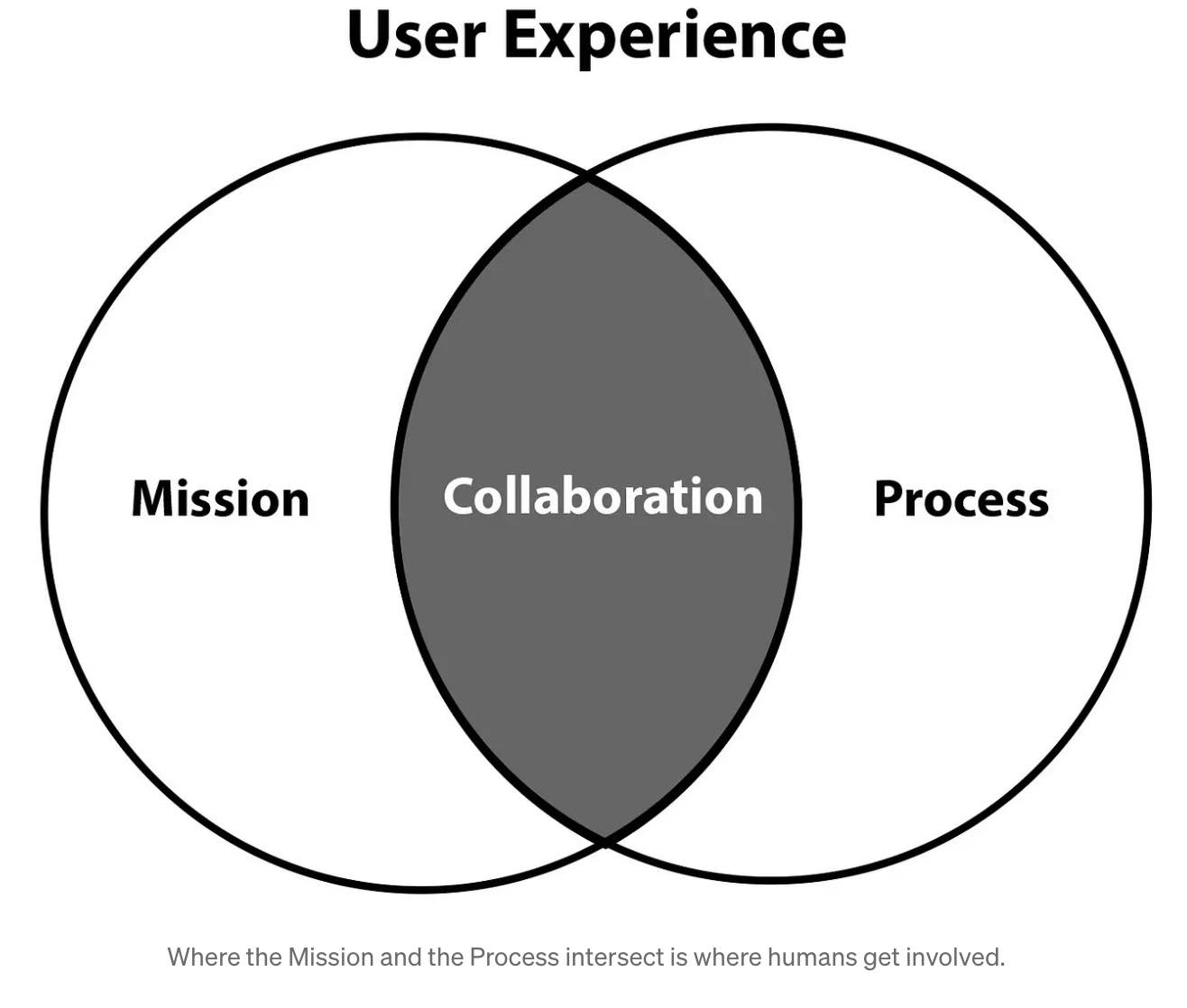
When preparing UX courses for LinkedIn Learning and books for Apress, I do a lot of research, reviewing articles from a variety of credible industry sources, reviewing the posts of the members of a variety of User Groups, following tutorials, and I even use ChatGPT to reveal something I may not have discovered. I have learned there is a lot of focus on UX that is either highly technical or reads like an academic research paper. Trying to distill all of this into something easily grasped by someone new to the field is difficult at best. As a result, I have developed three uncommon UX principles that are distilling the field of UX into something understandable.

Read More →
Blog Post 5

We need to have “The Talk”

A couple of months ago I posted my concerns about the ethics of Generative Art and AI/ChatGPT. In that piece, I suggested that there need to be some Ethics and Standards guidelines in place to guide UX and Graphics professionals in the use of these technologies. A recent abuse of these technologies makes it imperative that the professional associations develop and enforce these guidelines, that governments create legislation to govern the use of of these technologies, that the creators of any AI technology embed something in the image that says the image used AI, and that clients demand disclosure of the use of these technologies in any contracts for creative services.

Read More →
Blog Post 6

Training The AI Dragon

Like many newcomers to this madness, I know what I want, but putting it into words is another story. I have lived in a visual world since the start of Desktop Publishing. Over these 40 years, I’ve learned to sketch my ideas or quickly whip up a comp to show what I’m thinking. You learn this the hard way when you tell the client your vision, and then, when you show it, there’s an awkward silence, followed by, “That isn’t what I was expecting.” If you’ve been around a while, you know exactly what I mean. It’s something I’ve been pounding into my students’ heads and at seminars for years: “You can’t describe it. You need to show it.”

Read More →