

I have been doing this for a long time. Over 40 years, to be precise, and I am still not tired of it.
My career has never fit neatly into a single box, which I consider a feature rather than a bug. I am an author, an educator, a course creator, and someone who has spent four decades at the intersection of design, technology, and communication. That intersection keeps moving, which is what keeps the work interesting.
I spent 24 years teaching Interactive Media and UX Design at Humber College in Toronto, from 1995 to 2019. In that time I watched the industry transform completely, more than once. Students came in wanting to learn Flash and left knowing UX. The tools changed constantly. The fundamentals never did. Good design solves real problems for real people. That was true in 1995 and it is still true now.
Writing has always run parallel to teaching. I have published 26 books, primarily through Apress, covering interactive media, UX design, Figma, Adobe tools, and more recently, artificial intelligence. Writing a technical book is a particular discipline. You have to understand the material well enough to explain it clearly to someone who does not, and you have to do it before the technology moves on without you. I have got reasonably good at that.
My LinkedIn Learning courses have reached over 80,000 learners across more than 40 titles. That number still surprises me. The course I am most associated with, User Experience for Non-Designers, has become something of a gateway for people who never thought UX had anything to do with them. It does. It has everything to do with all of us.
I have been fortunate to take this work beyond Canada. I have lectured at the Central Academy of Fine Arts in Beijing, Shenzhen Polytechnic, and at conferences and institutions across Europe and the United States. Every time I teach outside my own context I learn something I could not have learned at home. I recommend it without reservation.
At the moment my focus is squarely on artificial intelligence and what it means for creative professionals. My current book, Creative AI: Generative and Agentic AI for Design Thinking and the Creative Industries, is being published by Apress. It is the most ambitious thing I have written, and I mean that in the best possible sense. Generative AI is not a tool sitting alongside the creative process. It is reshaping the process itself, and creative professionals need to understand it on their own terms rather than on the industry's terms.
I also write The Bumbling Prompter, which is my honest, ongoing account of learning to live and work with AI. The name is intentional. Nobody has this figured out yet. I certainly do not, and I find that more energising than troubling.
My photography keeps me sane. So does the fact that I still find this work genuinely interesting after four decades. The technology changes. The curiosity does not.
If you are here because of a book, a course, an article, or a talk — welcome. Have a look around. There is plenty to explore.
"The amount of fun we can have in this business should be illegal. I'll see you in jail."
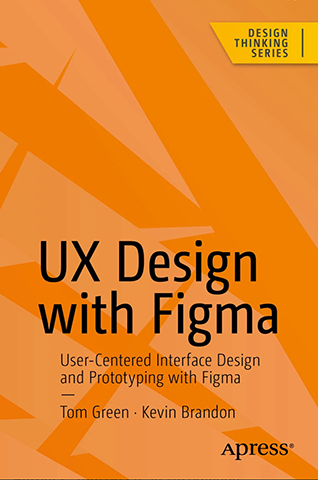
Twenty-six books sounds like a lot until you realise that each one was essentially a deadline with a cover. I have been writing for Apress since the early 2000s, and the catalogue reads like a map of where digital design has been over the past two decades. Early titles covered Flash and interactive media. Then came Adobe tools, UX design, Figma, and prototyping. My most recent work with Kevin Brandon, UX Design with Figma, reflects where the industry is right now. The current project, Creative AI: Generative and Agentic AI for Design Thinking and the Creative Industries, is where I believe it is going.
Writing a technical book is a discipline that does not get enough credit. You cannot fake it. You have to know the material well enough to teach it to someone who has never seen it, in a format that will still make sense six months after you finish writing it, by which point the software has usually shipped two updates. I have got reasonably good at staying ahead of that particular problem.

In 2007, I was contacted by the then Lynda.com asking if I was interested in recording a Fireworks course. At the time, Adobe Fireworks was "the web imaging" tool and I had written a few dozen tutorials around its use. Naturally I agreed and that was the start of a 20-year relationship with lynda.com which was sold the LinkedIn and became LinkedIn Learning.
To date I have recorded over 40 courses and taught over 100,000 learners, from around the world.My courses include Motion Design, UX Design, Mobile Design and numerous courses that concentrate on specific software applications such as UXPin, Stark and Figma. Suddenly my classroom at Humber College grew to encompass the globe and my teaching efforts expanded from local to global.It is humbling to have that sort of reach and is what motivated me to make my courses understandable to those who had never used the technology.

Some of the most interesting teaching I have done has been the furthest from home. I have lectured at the Central Academy of Fine Arts in Beijing and at Shenzhen Polytechnic, both experiences that challenged my assumptions about design education in ways that a classroom in Toronto simply could not. Design is a universal language but it is not a uniform one, and understanding how other cultures approach visual communication and technology makes you a sharper thinker about your own assumptions.
I have also spoken at conferences and institutions across Europe and the United States. The conversations that happen at the edges of those events, in hallways and over bad conference coffee, have shaped my thinking as much as anything I have read or written. If you ever get the opportunity to take your expertise somewhere unfamiliar, take it.
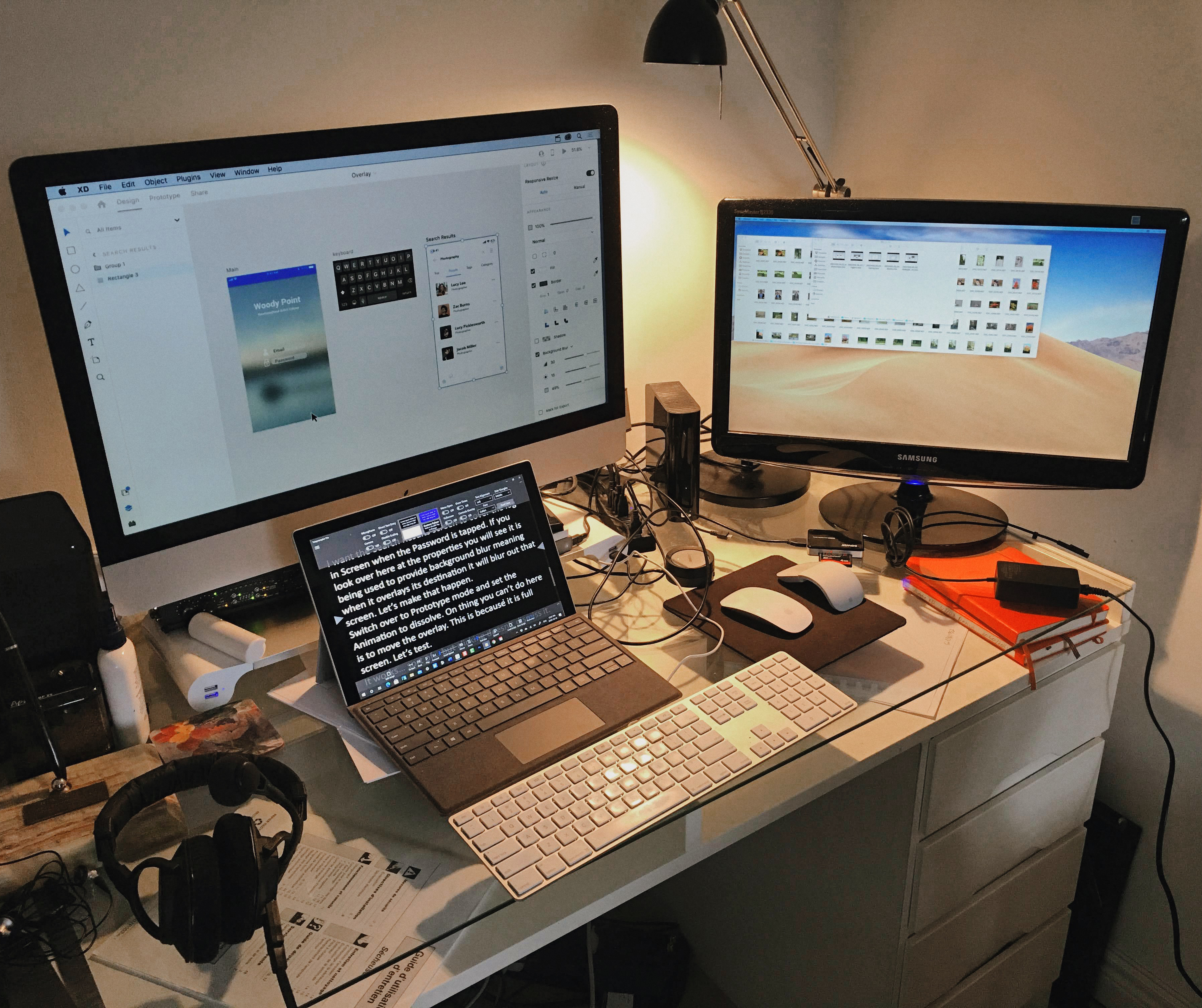
I am not precious about tools. The right tool is the one that gets the work done without getting in the way. That said, here is what my working life actually looks like.
For research and writing I rely heavily on NotebookLM for organising sources and finding connections across large bodies of material. Perplexity handles quick verification and current information. For automation and workflow I use n8n, which rewards the kind of tinkering mindset I have always had. The books get written in long focused sessions, usually in the morning, which is when my thinking is clearest.
Photography is the thing that is entirely not about productivity. I shoot with a Sony FE 50mm f1.8, which is an unassuming lens that consistently surprises me. Travel photography in particular has taught me to see differently, to notice light and composition in contexts where I have no expertise and no agenda. That carries back into design work in ways that are hard to articulate but very real.
The throughline across all of it is curiosity. I am genuinely interested in how things work, how people learn, and how technology changes both. After four decades that has not faded. If anything it has got worse.